
WFR vs. WFA: Which one is right for you?
Choosing the right wilderness medicine certification

Quick Comparison

Choosing the right wilderness medicine certification is important (and maybe not as straightforward as you’d hope!)
So you're ready to learn wilderness medicine—excellent choice. But should you take Wilderness First Aid (WFA) or go on a deep dive with Wilderness First Responder (WFR)? Here's a quick breakdown to help you decide.

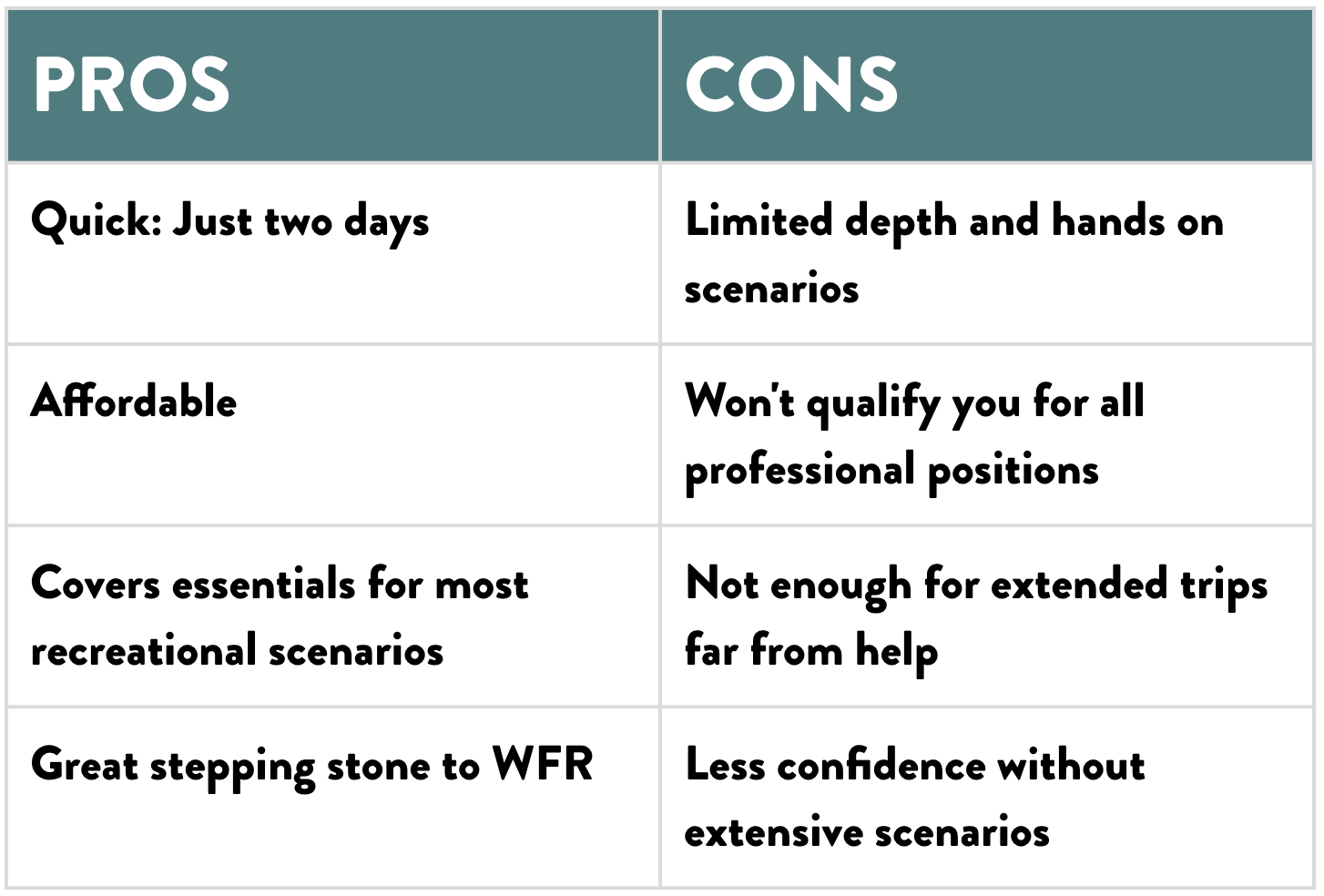
WFA courses are introductory courses focusing on general concepts and basic treatment skills for folks on half to full-day trips with reliable communication and where outside assistance is typically available within a few hours. The course covers patient assessment, basic wound care, improvised splinting, environmental emergencies, and when to call for help. WFA graduates are often employed as trip leaders in college outdoor programs and residential camps, or as guides in low-risk activities and environments.
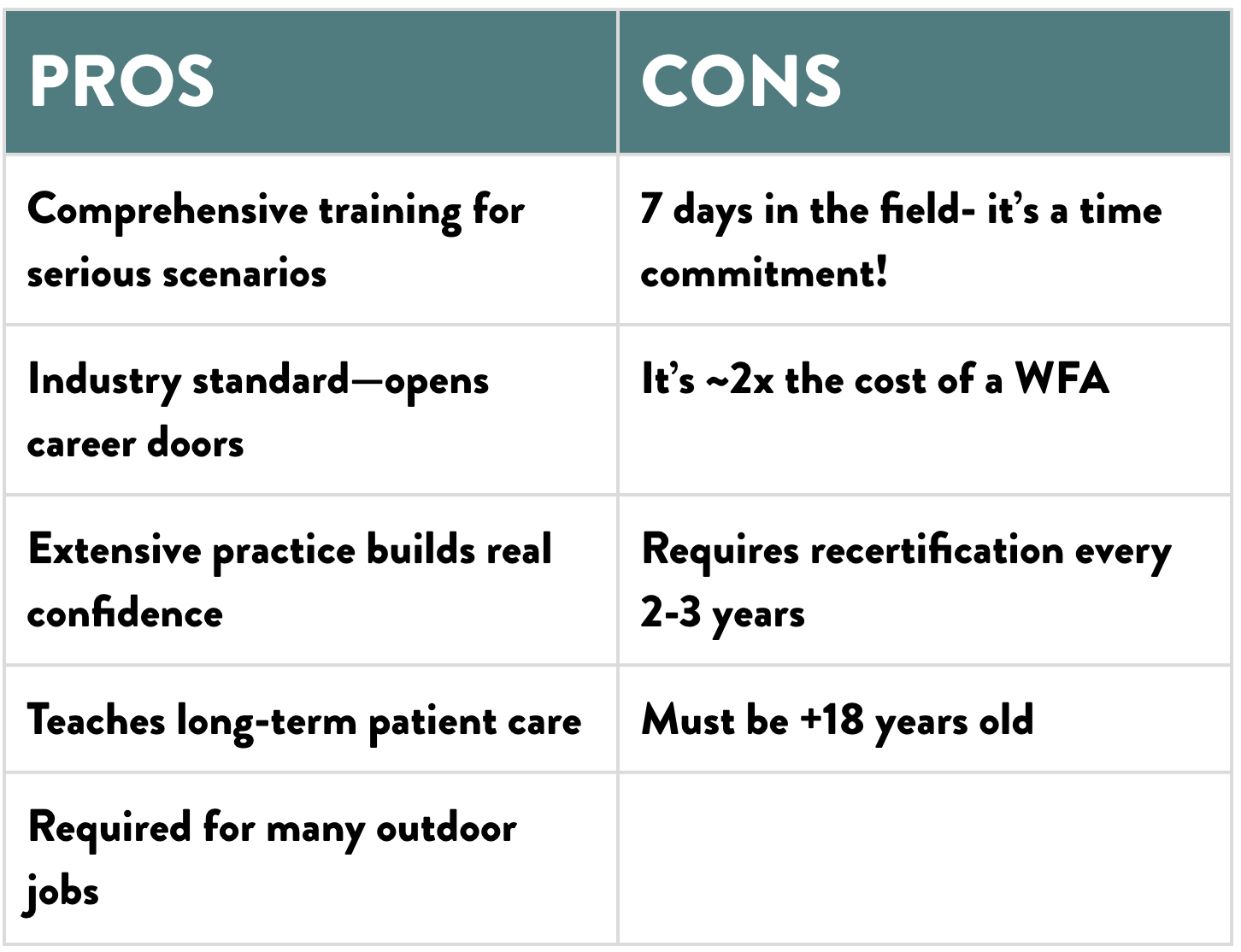
WFR (pronounced "woofer") courses provide ideal training for anyone who travels to remote locations, in challenging weather, with limited equipment, unreliable communication, and limited or no access to outside assistance. Over 72 hours of instruction, you'll cover comprehensive patient assessment, extended care protocols, and complex decision-making. WFR graduates often care for patients for prolonged periods and may need to make independent evacuation decisions. WFR certification is the outdoor industry's standard for guides, instructors, and outdoor professionals.
The Bottom Line
Choose WFA if you:
Stick to day hikes and weekend trips, simply don't have time for a full WFR, want to test the waters before committing to a WFR, are under the age of 14, or if you generally stay within a few hours of medical care.
Choose WFR if you:
Lead trips professionally, regularly venture deep into the backcountry, volunteer with search and rescue, need the certification for employment and want comprehensive, professional-grade first aid training.
Either way, you're making a smart choice. Both certifications beat wandering into the wilderness armed only with good intentions. And remember: the best first aid kit is the one between your ears—though bringing duct tape never hurts.
Stay safe out there, friends.