
Who We Train:Stories from BMG's Custom Courses
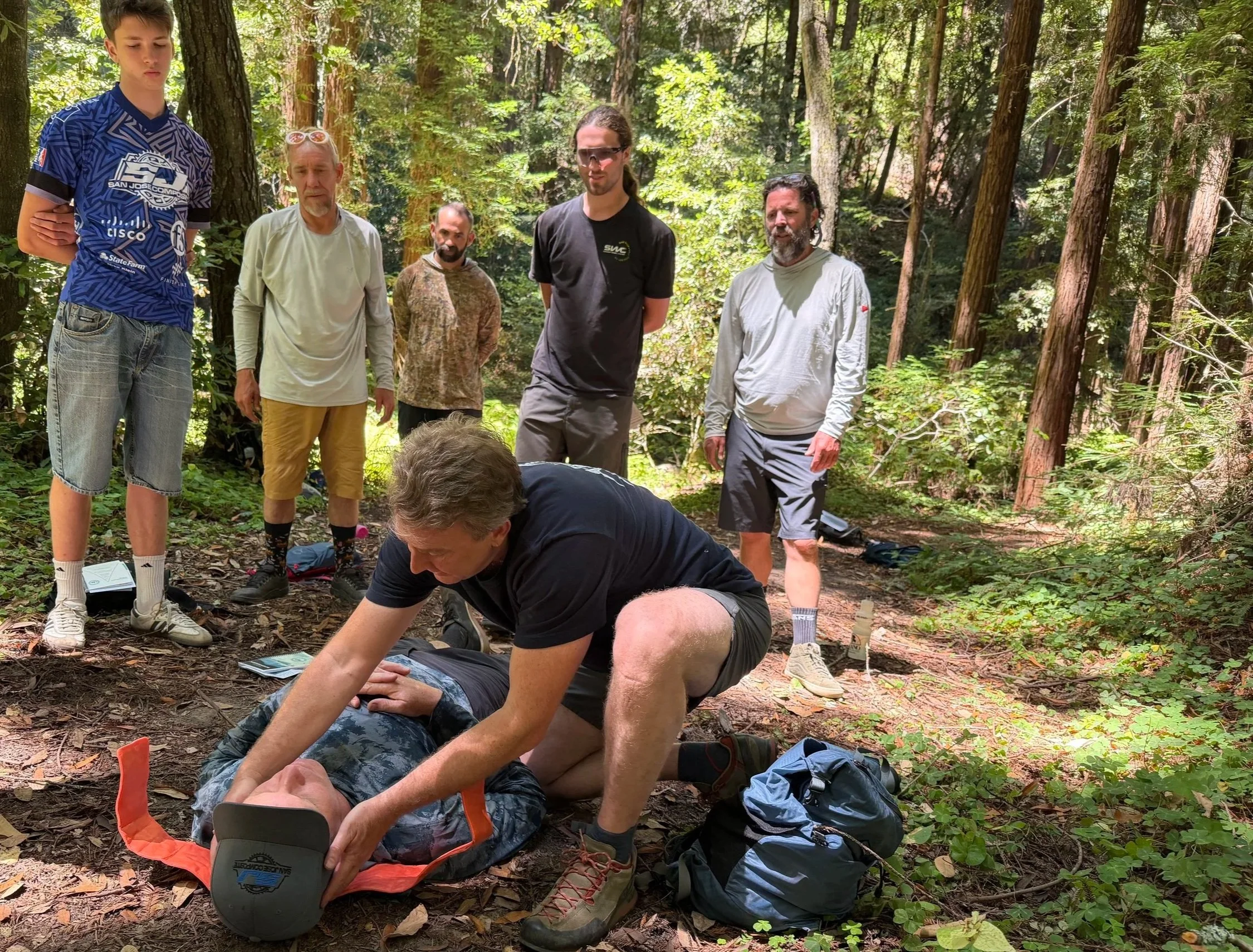
BMG runs public WFA and WFR courses across the Pacific Northwest, but more than half the courses we teach are private, built for one team, one job site, one set of risks. Trail crews don’t face the same hazards as sawmill crews. A crew at sea doesn't need the same scenarios as a field research team. Rather than running one standard curriculum for everyone, we start by listening. What does your team encounter in the field? What is a realistic response time if someone gets hurt? Then we build the course around that.
Here's a look at a few groups we've worked with, grouped by the kind of work they do.
Trail and Land Stewardship
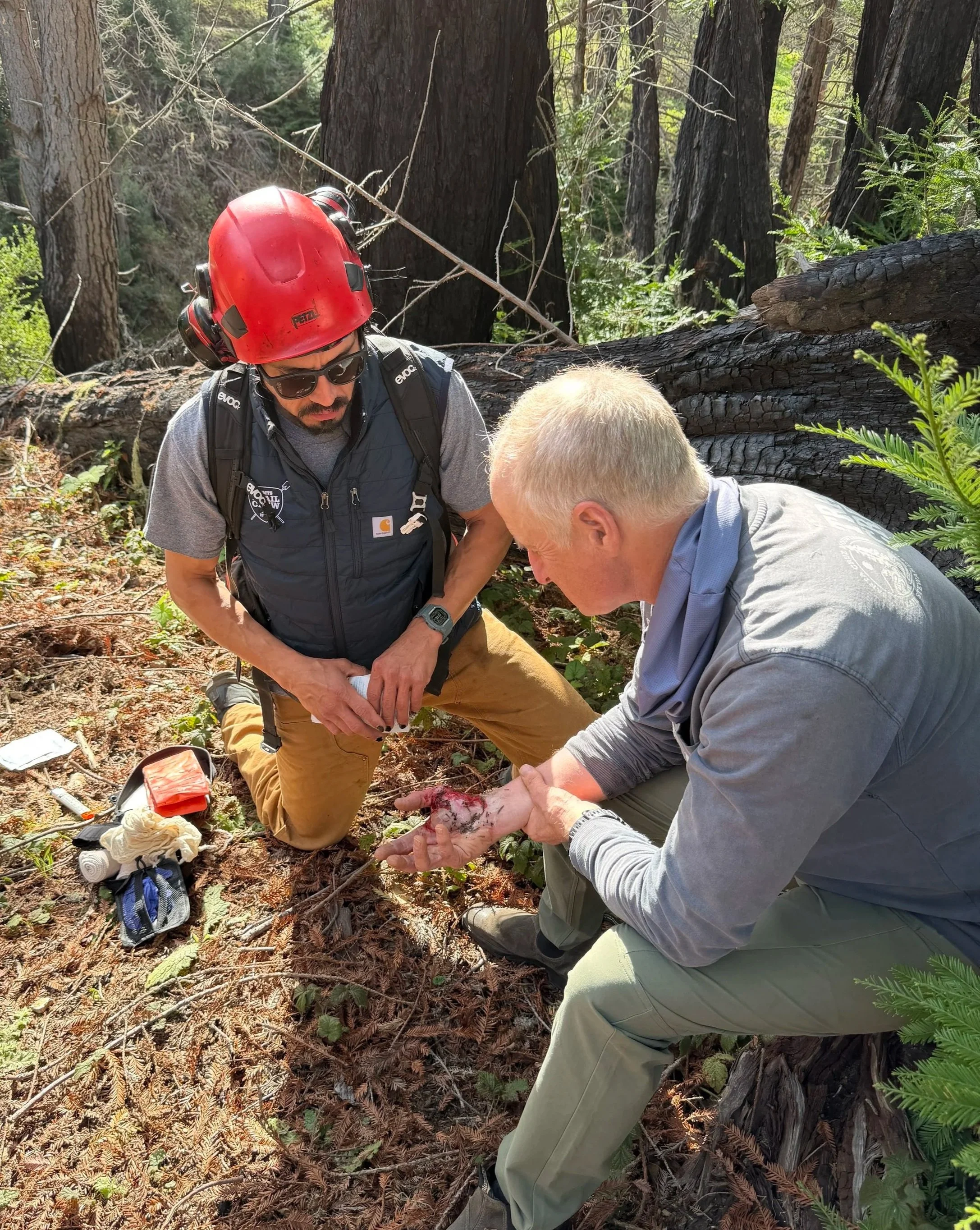
SCMTS trail crew practicing a scenario during their custom WFA training.
This is one of our biggest clusters of custom clients, and it makes sense: building and maintaining trails means working with hand tools, heavy gear, and rough terrain in small teams, hours from help.
Mountains to Sounds Greenway has spent over three decades conserving and maintaining the 100-mile I-90 corridor between Seattle and Ellensburg. We ran a Wilderness First Aid course for a 12-person crew of trail maintenance and conservation staff working remote sections of that corridor.
Closer to home, Whatcom Mountain Bike Coalition (WMBC) stewards and maintains Galbraith Mountain and other Bellingham trails, and Santa Cruz Mountains Trail Stewardship (SCMTS) runs a professional trail crew building and maintaining trails across the Santa Cruz Mountains. We also work with Evergreen Mountain Bike Alliance, Washington's largest mountain bike advocacy group, and with Sweetlines, which runs mountain bike coaching and camps for kids and women out of the Seattle area (six classes with them since 2018, a mix of basic first aid and mountain bike WFA). Different terrain and different missions, same need: people building and riding trails get hurt on trails, so their training has to be built for that.
Field Science and Conservation
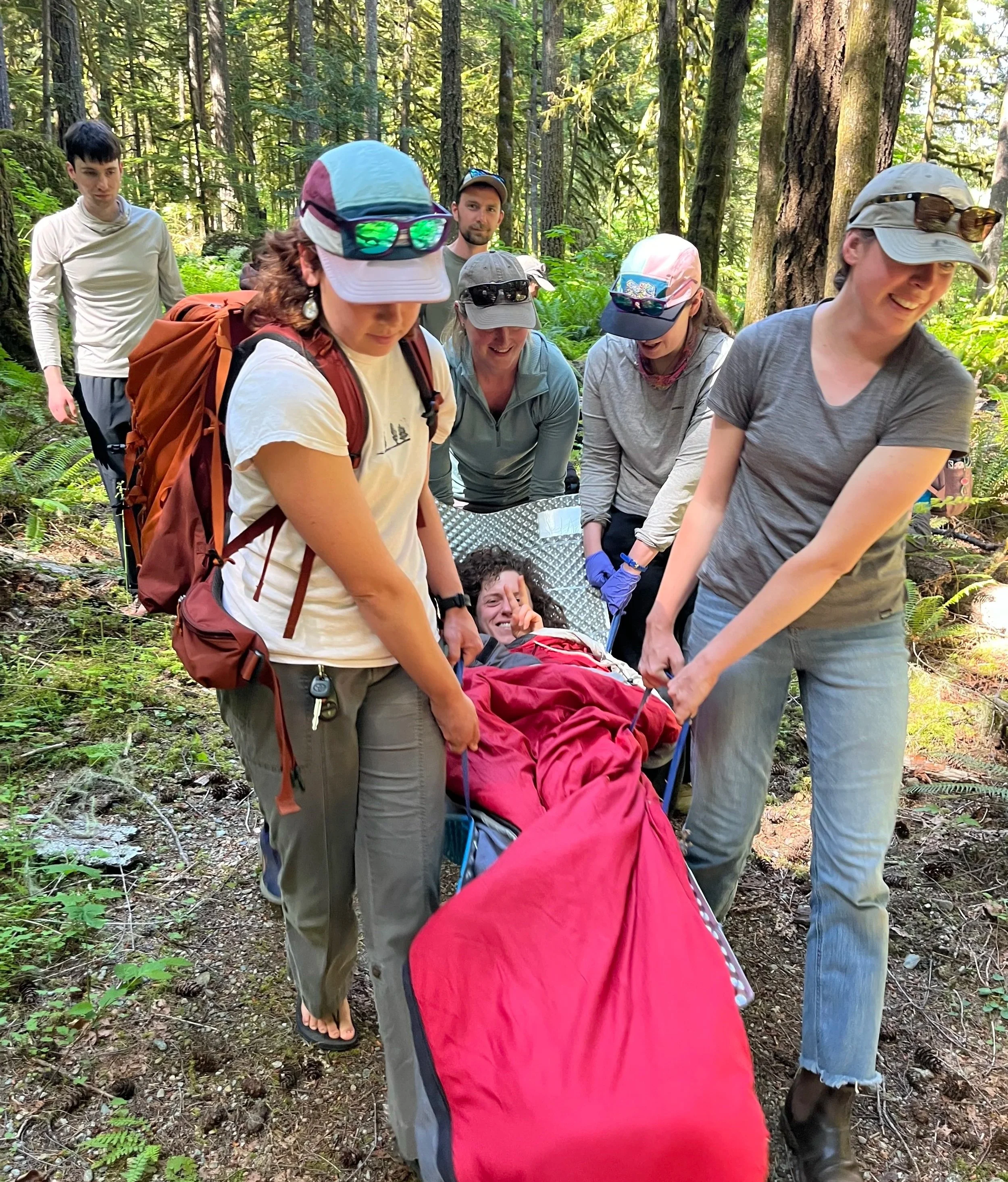
A litter carry scenario, part of WFA training for NCNP research staff.
A second cluster of clients spends their days doing hands-on research and restoration work in remote settings, often alongside wildlife.
Natural Systems Design (NSD) is a Pacific Northwest environmental engineering firm that restores rivers, shorelines, and wetlands, work that puts field crews along waterways for long stretches at a time. We've taught First Aid and CPR for their staff since 2022.
Methow Beaver Project, a new custom partner as of 2026, relocates and restores beaver populations across the Methow and Okanogan watersheds to rebuild healthier streams. We ran WFA for their 10-person field crew, who do research and habitat restoration and, on a regular basis, some of whom handle rattlesnakes as part of the job!
NOAA's Central Valley office does river-based salmon and steelhead recovery work in remote settings. We ran two Wilderness First Aid classes for their Sacramento-based field staff, 22 participants total.
North Cascades National Park runs long-term ecological research and monitoring throughout the park's remote backcountry. We ran Wilderness First Aid in Marblemount for an 18-person group of research teams working out in the field, pictured here.
Trades and Industry
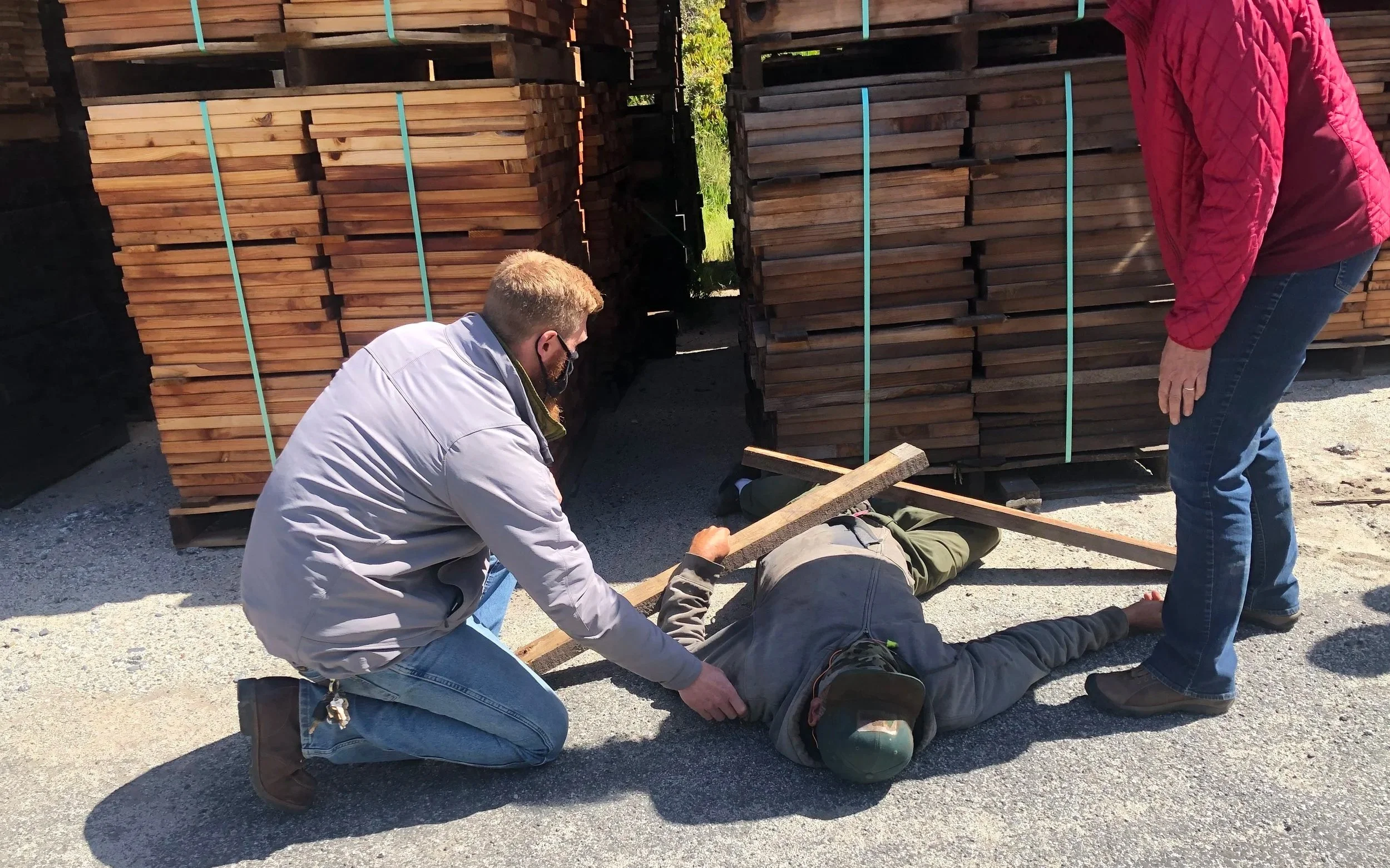
A jobsite injury scenario at Big Creek Lumber.
One of our longest-running custom relationship is with Big Creek Lumber, a family-owned sawmill and timber operation on California's Central Coast. Their remote milling site comes with the hazards you'd expect around heavy equipment, logs, and blades. We've been teaching CPR/First Aid for their crew since 2018, eight classes and counting, in a two-day format where each day is its own class with a different group of participants. It's one of our favorite groups to come back to.
Closer to home, we've taught First Aid & CPR for Instinct Builders, a Bellingham-based general contractor, since 2023. Their crew works on remote, undeveloped jobsites, so the training leans into construction-related injuries and patient assessment for a 15-person crew that can't count on a quick response if something goes wrong.
A Different Format: Employee Seminars
Not every custom program is a multi-day certification. We also build shorter, topic-specific seminars for teams who want targeted training rather than a full course.
For Brooks, we ran a roughly four-hour seminar at their Seattle headquarters, built with their team around the topics that mattered most to their employees: air quality, heat, and the injuries trail runners see most often. It's a good example of how "custom" can mean scaling the format down as much as it means scaling the curriculum to a specific environment.
Every one of these groups came to us with a different set of risks and a different definition of "remote." That's the point. Wilderness medicine training only works if it matches the terrain, the team, and the job.
Want to talk about a custom course for your organization? Visit our Custom Programs page, browse the full Custom Programs catalog, or get in touch with our team.