
Washington Teachers- Earn Clock Hours With Us This Summer!
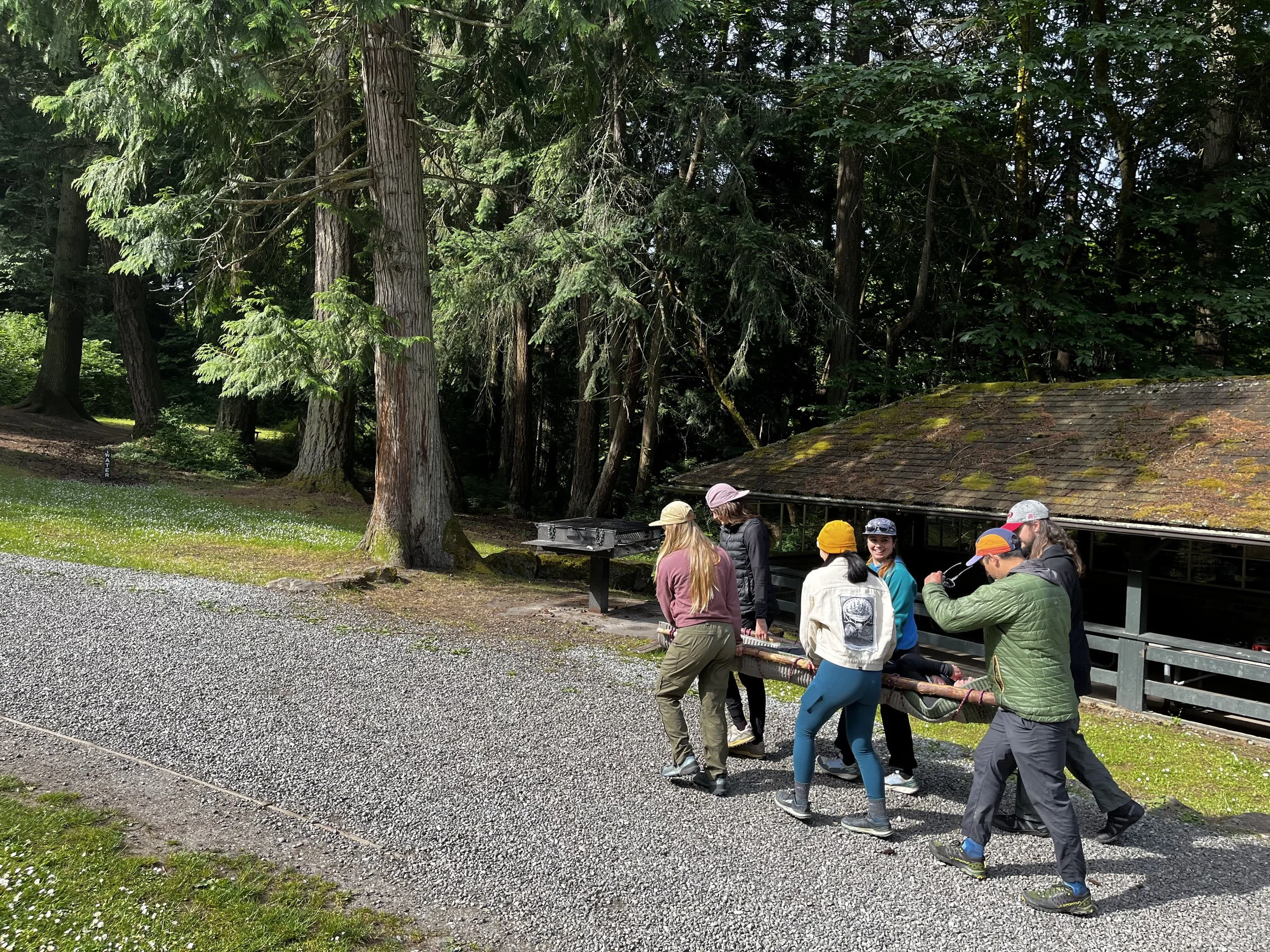
Most teachers spend their summers doing one of two things: recovering from the school year, or hunting for professional development that doesn't feel like a waste of a perfectly good summer day. What if your clock hours came with Douglas Fir forests, Salish Sea views, and afternoons practicing first aid assessments and splinting broken arms on the trail?
Backcountry Medical Guides is a Washington State-approved clock hour provider for the 2025-2026 approval period. That means Washington State teachers can take our Wilderness First Aid (WFA) or Wilderness First Responder (WFR) courses this summer in Bellingham, WA and count every hour toward their certificate renewal.
Note that the clock hours are awarded in: Health & Safety
What Are Clock Hours, Anyway?
If you're a Washington State teacher, you already know: clock hours are required for certificate renewal. You need a certain number of approved continuing education hours every few years, and they have to come from a PESB-approved provider.
Backcountry Medical Guides was approved by the Professional Educator Standards Board (PESB) in Fall 2025. Our courses fall under the Health and Safety subject area, which means the skills you learn here are directly relevant to your role as an educator. Think CPR, patient assessment, emergency response. These aren't just backcountry skills. They're classroom-ready skills.
Clock hours are calculated at one hour per 60 minutes of instruction, so a two-day WFA course (20 hours) or a five-day WFR course (70 hours) translates to a meaningful chunk of your renewal requirements.
Why Wilderness Medicine for Professional Development?
Here's the thing about standard PD: it's often designed for the classroom, in a classroom, about the classroom. Our courses flip that script. You'll spend your time outdoors! Hiking through Larrabee State Park, mountain biking on Galbraith mountain, or sailing in the San Juans- you’ll practice building skills that are genuinely useful - whether you're chaperoning a field trip, running recess duty, or leading a weekend backpacking trip with students.
👉 We hear it all the time from our graduates: the skills they picked up in the backcountry came in handy at home. A student collapses on the playground. Their partner crashes their bike at Galbraith and breaks their collar bone. An epinephrine auto-injector needs to be used. These aren't hypotheticals- they happen and teachers are often the first on scene. 👈
As one recent participant put it: "The highlights of the course was the location as well as real life scenarios and stories and expertise that both my peers and the instructors brought. The scenario-based learning and "case" studies with patients were super helpful, and going through the patient cards and what to check for each time really enforced and helped my muscle memory. I truly feel better equipped to provide first aid in the outdoors!" — Big Sur WFA, WFA 2025
Our Two Options for Teachers
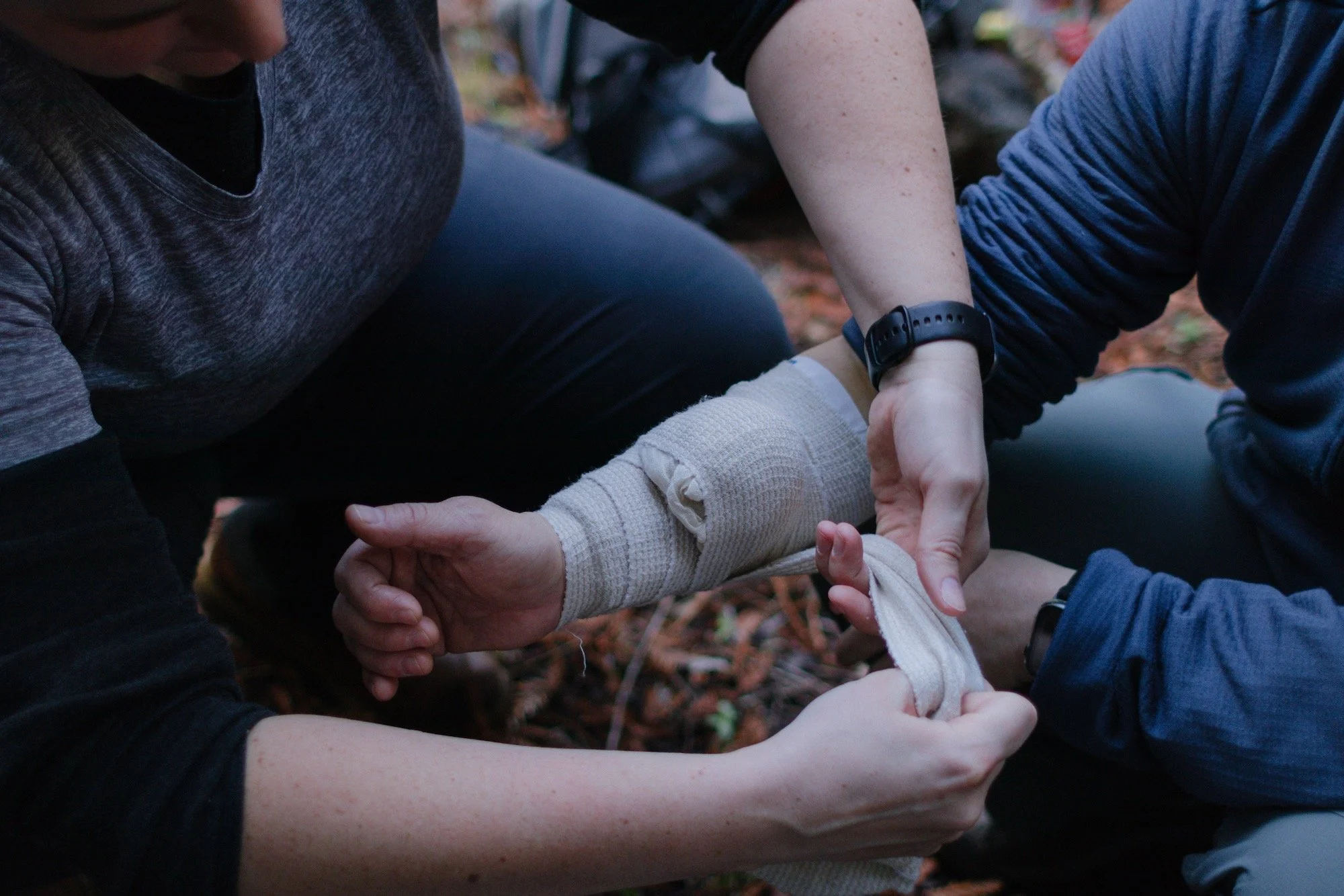
The WFA is our introductory course. It’s perfect if you want solid, practical first aid skills without committing to a full week. Over two days, you'll cover:
• Patient assessment and scene safety
• Basic wound care and improvised splinting
• CPR (adult and pediatric)
• Epinephrine auto-injector administration
• Environmental emergencies
• When, and how, to call for help
Our Bellingham WFA courses run right through Larrabee State Park, with Douglas Fir forests, gorgeous coastline, and expansive views of the Salish Sea as your classroom. Several summer dates are available, including June 13-14 and September 12-14, 2026, September 26-27, 2026. A WFA for Women course is also offered April 11- 12. Check the full schedule here.
The Seattle WFA courses run in partnership with Sail Sand Point and the University of Washington. Given the proximity to the Salish Sea and the Cascades it’s no wonder that many folks in the Seattle community spend time adventuring on the water and on the trails!
Also, it’s good to know that the WFA meets and exceeds the First Aid/CPR:AED requirements that many Washington school districts have in place, making it one of the most practical summer PD investments you can make!
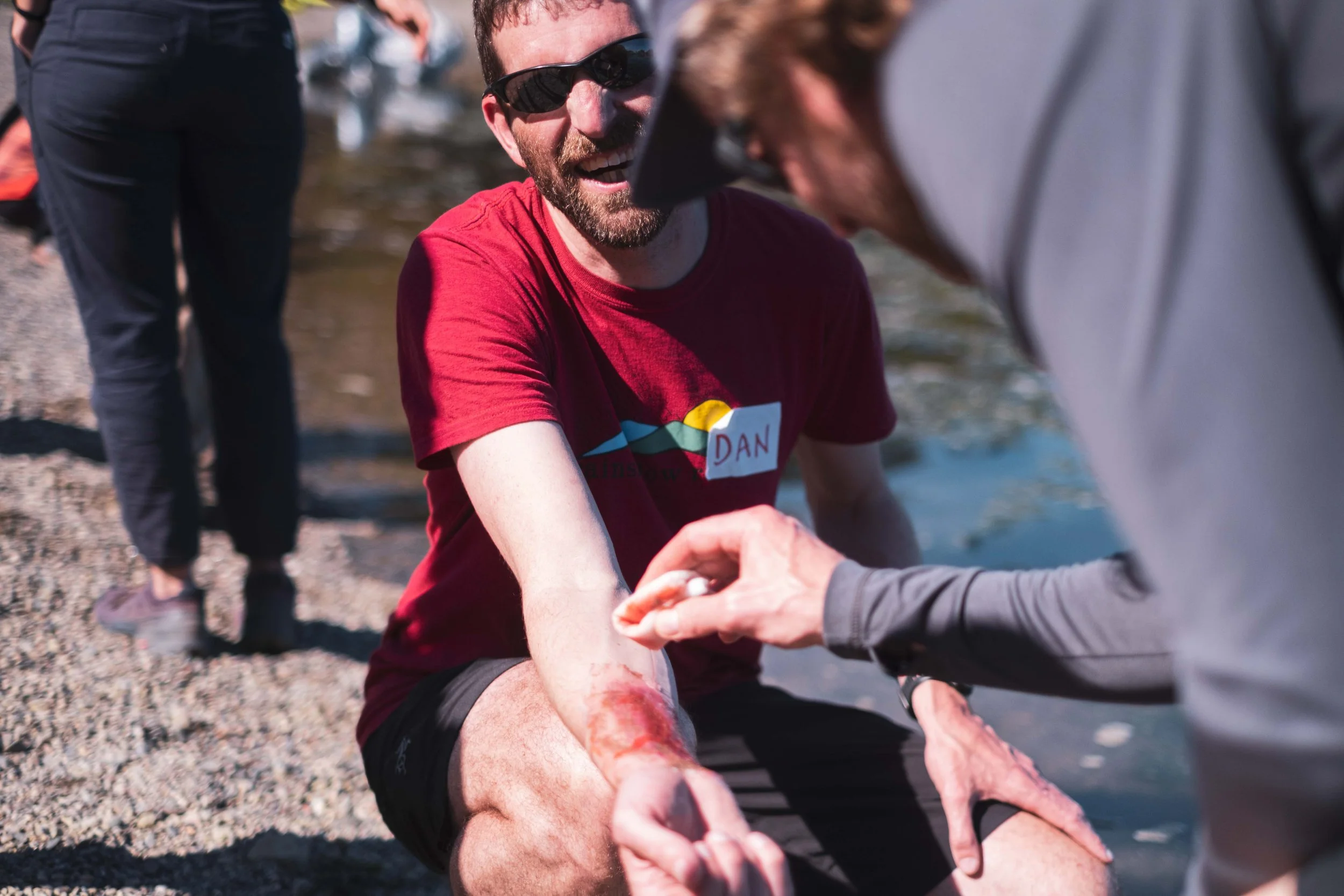
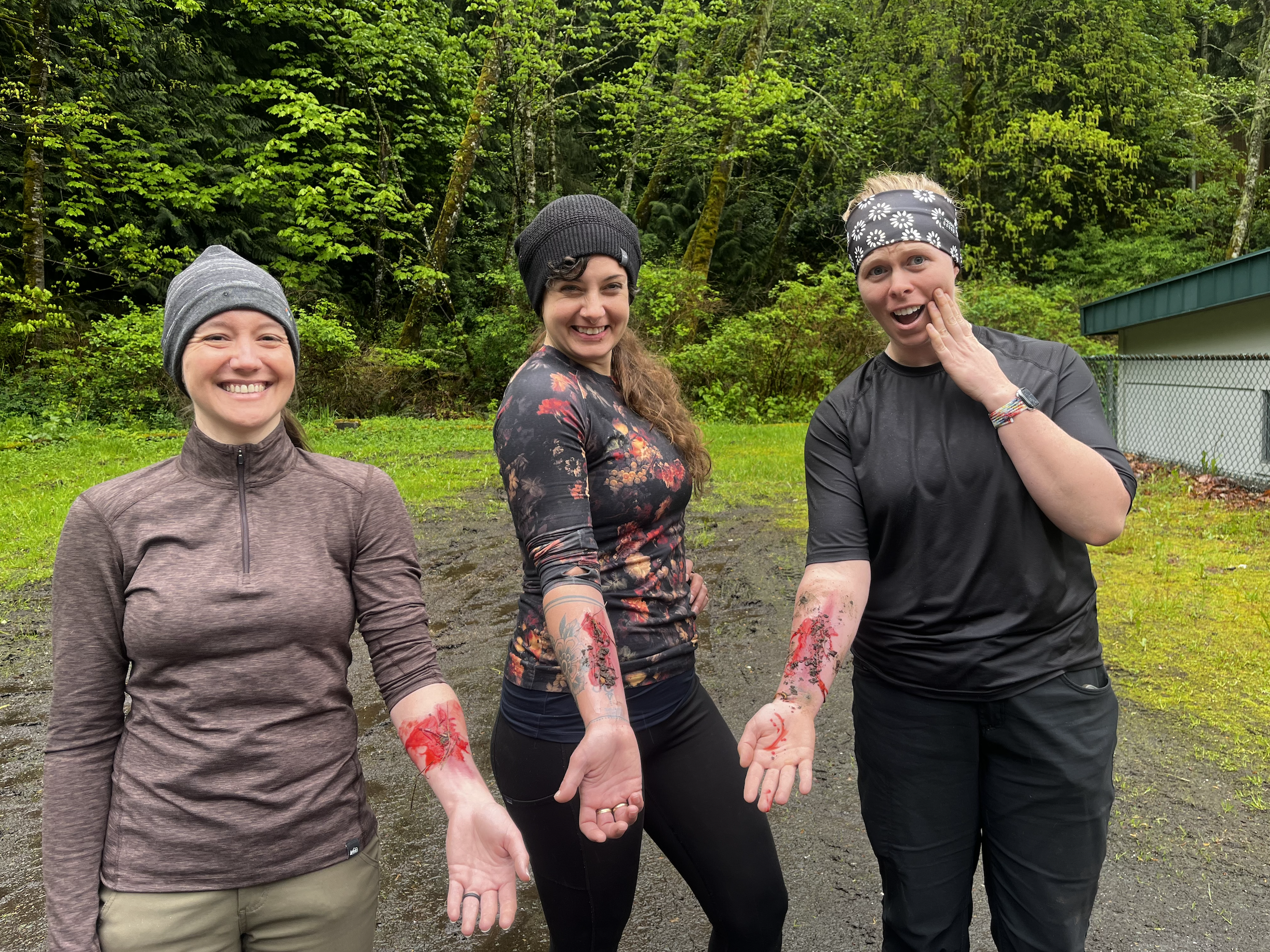
The WFR (pronounced "woofer") is the outdoor industry's gold standard. It's a five-day, internationally recognized certification with over 70 hours of instruction. You'll learn comprehensive patient assessment, extended care protocols, and complex decision-making in remote environments.
This is for teachers who spend serious time outdoors, or who want to. It's the certification required for professional outdoor guide and instructor roles, if you're thinking about expanding your career into outdoor ed, this is your move.
Bellingham WFR courses: June 15-19, August 17-21, and September 14-18, 2026
Seattle WFR: June 22-26.
And for the Mariners, we have a special Maritime Medical Responder Course! Similar to the WFR, but tailored to the marine environment.
Scholarships
We believe this training should be accessible. BMG offers a scholarship program with quarterly application windows. No one should miss out on this training because of cost.
The Details
After completing your course, every participant receives a completed Form SPI 1125- the official Washington State form used to document and claim clock hours for certificate renewal. You'll want to hold onto that form; teachers are required to keep it for seven years.
Registration must happen before the course begins, so be sure to sign up in advance.
👉 View our full schedule here, and if you’re not sure which course to take check out this post. 👈
Either way, we’d love to help you spend some of your summer on the trails, rather than sitting in a conference room looking at PowerPoint slides! Email us at info@backcountrymedicalguides.org if you have questions.
Stay safe out there, friends. 🌲